
For large, public, and enterprise institutions:
tailored digital badge operations
From bulk issuance to hundreds of people to joint operation with affiliates, privacy protection, and Korean–English certificates—choose only the features you need for your environment and security requirements.
What are Kolleges Advanced options?
Kolleges Advanced options are a bundle of enterprise features configured to fit the operations and security requirements of large, public, and enterprise institutions. They comprise seven features: custom competency data, branded issuance emails, pseudonymization and view approval, Korean–English certificates, partner co-issuance, class auto-issuance, and pathways. They extend Kolleges, the credential operations platform used by more than 300 institutions (as of Sep 2026) and built on 1EdTech Open Badges(2.0/2.1/3.0) .
The 7 advanced features at a glance
| Feature | What it does | Main audience |
|---|---|---|
| Custom competency data | Design your own badge data fields, such as job competencies, grades, and project scores | Universities and companies focused on proving competencies |
| Branded issuance emails | Change the subject, body, and design of notification emails to match your brand | All institutions |
| Pseudonymization & view approval | Automatic pseudonymization of sensitive data; originals viewable via two-step request → approval | Public and large institutions |
| Korean–English certificates | Set two languages in one badge; recipients switch to download and share | Institutions running global programs |
| Partner co-issuance | Joint issuance by multiple institutions; separate permissions per affiliate with central management | Institutions with consortia or affiliates |
| Class auto-issuance | Auto-issue badges when attendance, assignment, and exam criteria are met | Institutions running high-volume, recurring courses |
| Pathways | Design step badges per track, with a final badge auto-issued when all steps are done | Institutions running tiered competency programs |
See core issuance and verification features on the Digital badges & certificates page, and terms for your institution in a Talk to sales.
If this sounds like you, you need advanced features
Universities · Large education institutions
Schools issuing badges to thousands and splitting permissions by department and center
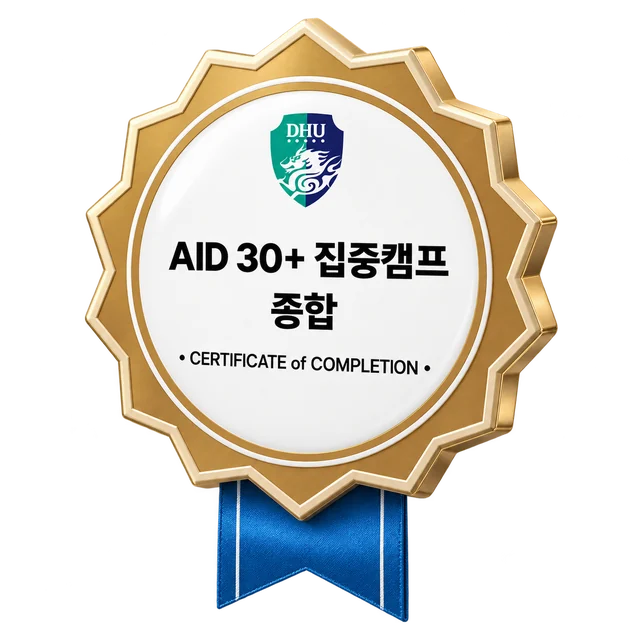
At Dongwon Institute of Science and Technology, three offices—the AID30+ Intensive Camp, AI Education Innovation Center, and SME Support Center—issue separately with overall status managed centrally.
Dongwon Institute of Science and Technology interview
Public institutions · Government programs
Institutions that must prove program outcomes with data and meet privacy standards
University of Seoul’s Industry-Academic Cooperation Foundation designed seven RISE programs as a 15-badge system, running undergraduates, citizens, and corporate employees on one infrastructure.
University of Seoul RISE story
Corporate training · HRD
Organizations that track employee competencies as data and certify automatically on course completion
BizMarket auto-issued 166 security training certificates to employees (with unique IDs and KakaoTalk notifications) to meet training evidence requirements.
BizMarket security training story
Set it up yourself,
to fit your operations and brand
Design the data in your badges and the issuance experience yourself.
Design the data your badges carry yourself
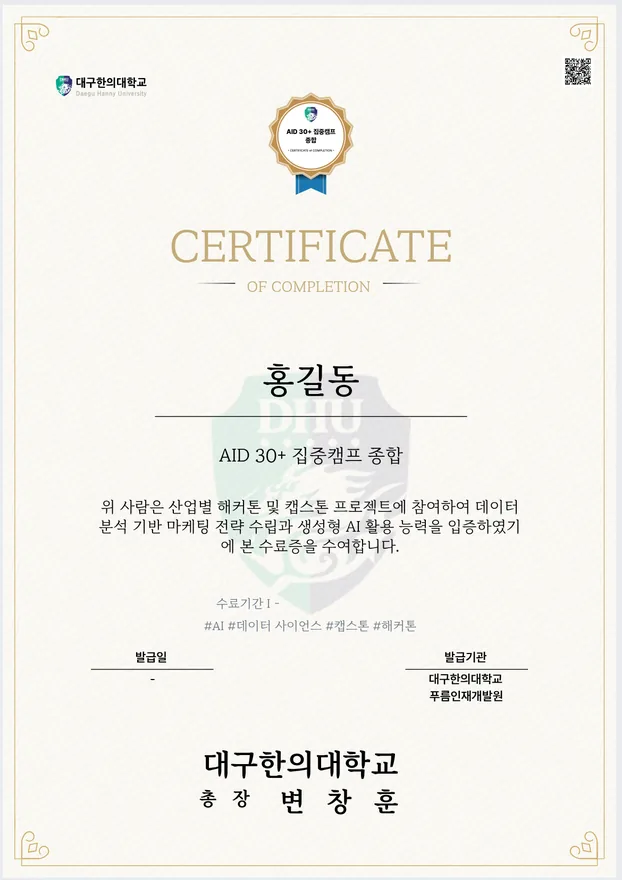
Freely add data fields such as job competencies, grades, project scores, and hours completed. Badges become verifiable competency data, not just certificates. Daegu Haany University, for example, puts assessment criteria for AI project outcomes into its badges so employers can verify student competencies.
Daegu Haany University interview
Set the subject, body, and design
of issuance emails yourself
Change everything from the color palette to the subject, body, and button text in the admin. The first email recipients receive feels like official communication from your institution.
Meet privacy standards
and issue certificates that work anywhere
Meet Korea’s Personal Information Protection Act and issue Korean–English certificates verifiable at home and abroad.
The same badge, issued in two languages
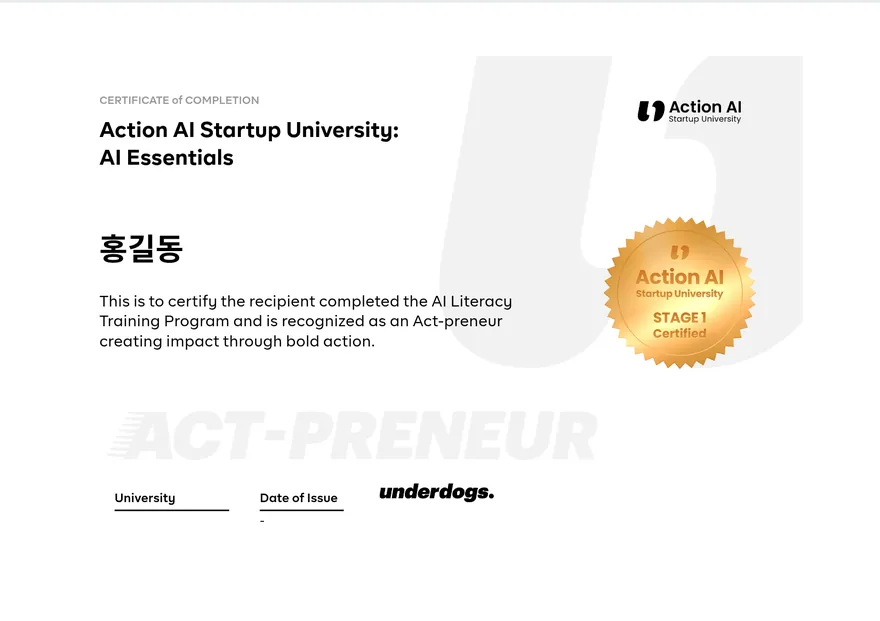
Set Korean and English certificates in one badge, and recipients switch languages to download and share as needed—ready for jobs and study abroad and global business proof. UD IMPACT, for example, issues completion badges for its AI startup program for university students in India and Indonesia as proof for its global program.
UD IMPACT global story

Protect personal data, and view only what you need
Sensitive data in issuance records is pseudonymized automatically, and originals can be accessed only through a view request → approval process, meeting Korea’s Personal Information Protection Act (PIPA).
- ISO 27001-certified information security
- Automatic pseudonymization of sensitive data
- Two-step access control: request → approval
- Blockchain-based tamper protection
- Two-factor authentication (2FA)
Issue together with affiliates,
and connect course operations to issuance automatically
Joint issuance, separate permissions, and course-based auto-issuance simplify large-scale operations.
One badge, several institutions’ names
Issue jointly with partners and affiliates, give each center independent issuing permissions, and manage the full picture at headquarters. Korea Polytechnics Daejeon Campus, for example, issues one jointly named badge with Daejeon Institute of Science and Technology for a RISE consortium course, and Daegu Haany University co-issues with Pureum HRD Institute under two signatures.
Korea Polytechnics Daejeon Campus story
From opening a course to issuing badges, all connected
Open a class, take sign-ups, and badges issue automatically to learners who meet mission criteria such as attendance, assignments, and exams—no missed badges, less manual work. UD IMPACT, for example, connected its own LMS via API so badges issue automatically to learners who meet completion criteria.
UD IMPACT API integration story
Step badges build up
into one final competency credential
Group courses into a pathway, and step badges build up in order. Complete every step, and the final badge is issued automatically.
Collect step badges for each track to complete the final badge
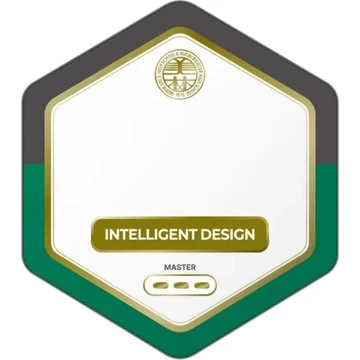
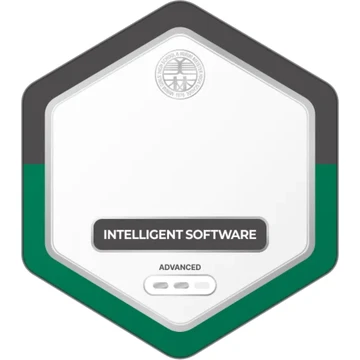
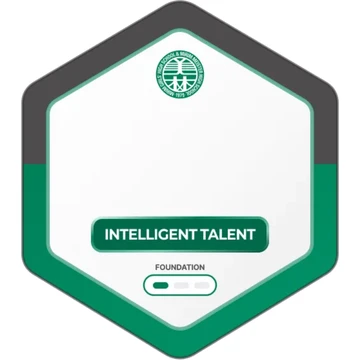
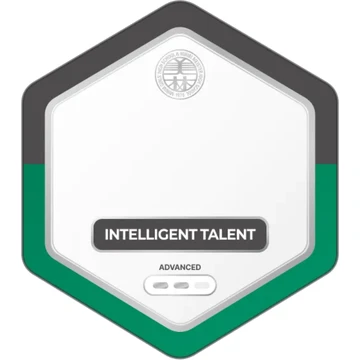
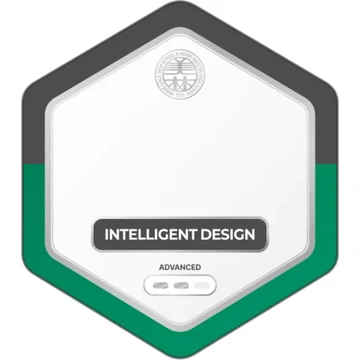
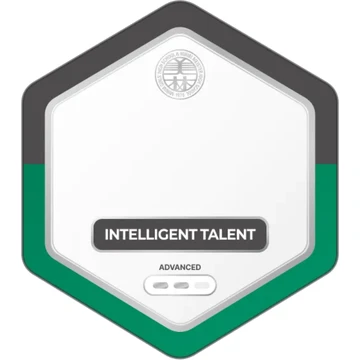
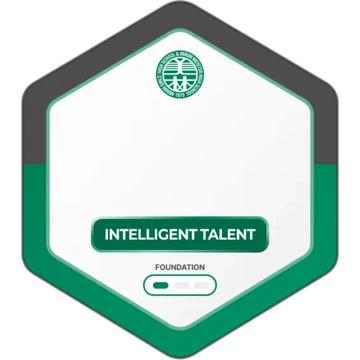
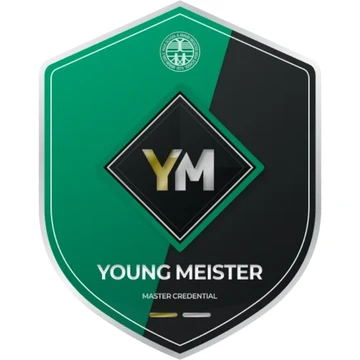
Design different step badges for each track, such as design or software. When all steps are done, the track’s final badge is issued automatically, and learners see their current step and next goal on the recipient screen. Mirim Meister High School, for example, runs three pathways: comprehensive design and software job competency credentials, and Young Meister Master.
Pathways & recommendations
- Design step badges and final badges per track
- Elective steps (choose one)
- Final badge auto-issued when every step is complete
- Recipients see their current step and next goal
Frequently asked questions
The most frequently asked questions before adopting advanced options.
Last updated: 2026-07-15 · Facts refreshed quarterly